Industrial buyers in Gabon need bulk loading equipment that matches material characteristics, vehicle dimensions, and loading targets. Exelon Weighing System supports requirement planning for a Bulker Loading System Exporter To Gabon, with manufacturing support from Ahmedabad, Gujarat, India.
What Should a Bulker Loading System Handle at Your Facility?
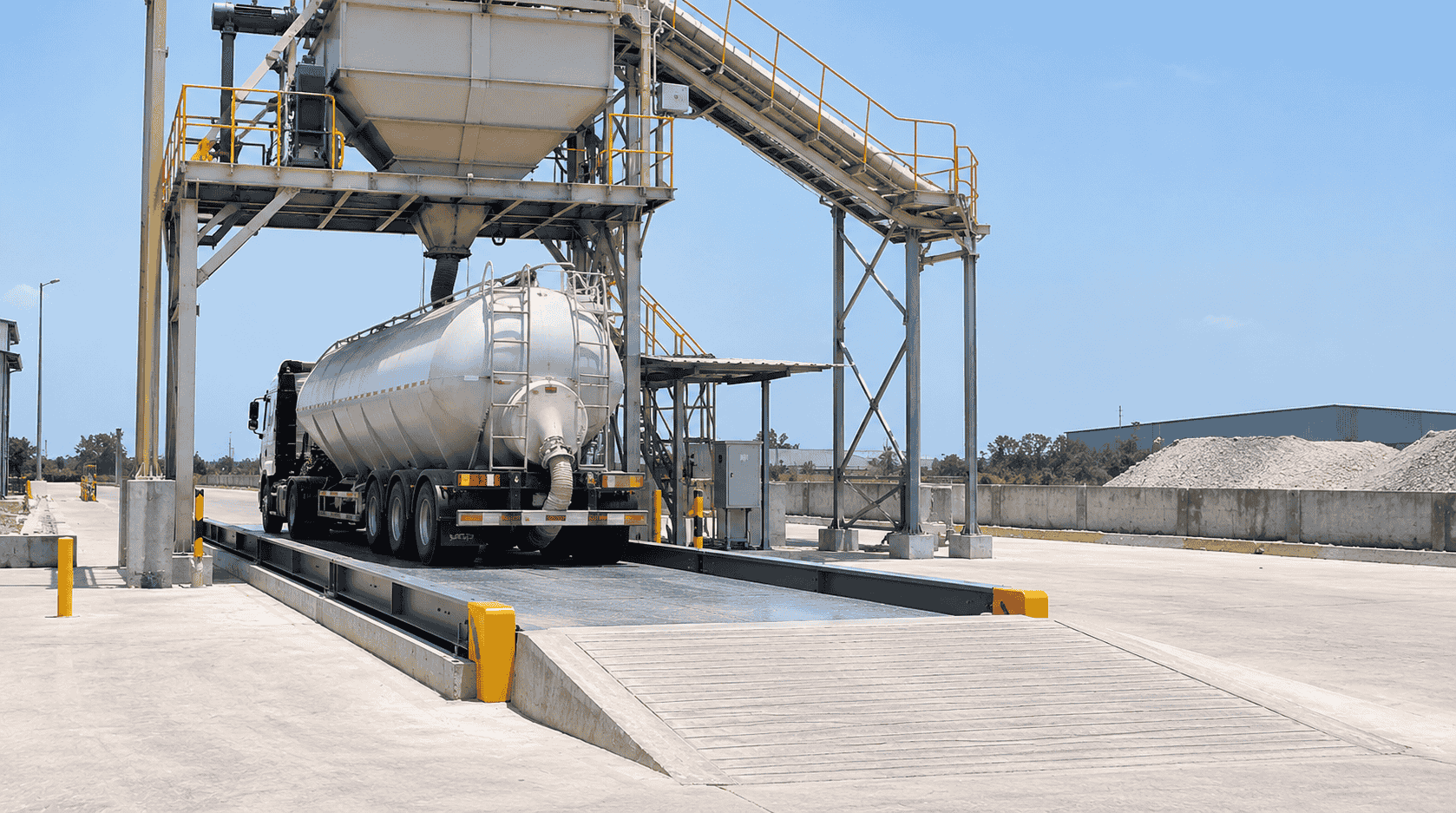
A bulker loading system transfers bulk materials from storage or conveying equipment into bulk transport vehicles. It is used in operations where controlled material discharge, suitable loading arrangements, and dust management may be important.
Depending on the material and plant configuration, the system may be considered for cement, fly ash, minerals, and other compatible dry bulk materials.
For buyers in Gabon, the first step is to identify the material, required loading volume, vehicle type, and existing plant arrangement before deciding on the equipment configuration.
Match the Loading Arrangement to Your Material
Different materials behave differently during transfer. Fine powders may require attention to dust containment, while granular materials may need suitable discharge arrangements to maintain a consistent flow.
Before selecting a system, review:
- Material characteristics: Check particle size, moisture content, flow behaviour, and dust generation.
- Loading point: Confirm whether material comes from a silo, hopper, or conveying line.
- Vehicle compatibility: Establish the height, inlet position, and access requirements of the receiving bulker.
- Operating conditions: Consider loading frequency, available space, and environmental conditions.
These details help determine which configuration is appropriate for the intended operation.
How the Bulk Loading Process Is Planned
A typical loading arrangement can be assessed through four stages.
- Material storage: Bulk material is held in a suitable silo or hopper.
- Material transfer: A compatible conveyor or discharge mechanism moves material towards the loading point.
- Vehicle positioning: The bulker is positioned beneath the loading outlet according to the site layout.
- Controlled loading: The material enters the vehicle through the loading arrangement, with dust-control provisions incorporated where required.
The exact process depends on the plant design, material properties, and level of automation. Buyers should confirm the proposed operating sequence before finalising the equipment.
Technical Details to Confirm Before Ordering
When evaluating a Bulker Loading System Exporter To Gabon, procurement teams should prepare a clear technical requirement.
Important details include the expected loading rate, material type, vehicle dimensions, outlet arrangement, available headroom, and required control functions. If weighing or level monitoring is part of the process, clarify how these functions will integrate with the loading equipment.
Also consider the local installation environment, electrical supply, operator access, and maintenance clearance. Sharing drawings, photographs, and existing equipment details can help the supplier assess the project more accurately.
Fabrication and Equipment Checks Before Dispatch
Equipment intended for export should be reviewed against the agreed technical requirements before dispatch.
Buyers should request confirmation of the main dimensions, material-contact components, structural arrangement, and specified operating functions. Where applicable, inspection should cover weld quality, surface condition, moving components, and control-panel arrangements.
It is also useful to agree on the inspection procedure, available test documentation, packing requirements, and shipping documentation in advance. Any required inspection or acceptance criteria should be defined in the purchase order rather than assumed.
Installation and Maintenance Planning in Gabon
Installation planning should begin before the equipment arrives. Confirm the foundation or supporting structure, access for transport and lifting, electrical connections, and the space needed for maintenance.
After installation, commissioning should verify the loading sequence, equipment movement, control functions, and compatibility with the existing material-handling system.
Routine maintenance may include cleaning material build-up, inspecting moving parts, checking electrical connections, and examining wear-prone components. The maintenance schedule should follow the manufacturer’s instructions and the actual operating conditions. Buyers should also discuss spare-part availability and remote technical assistance before ordering.
Services
- Bulker loading system requirement assessment for industrial projects.
- Equipment configuration planning based on material and vehicle requirements.
- Coordination of manufacturing details and project-specific arrangements.
- Installation planning, commissioning guidance, and technical support discussions.
Location
For industrial projects across Gabon, loading equipment requirements may arise around Libreville, Port-Gentil, Franceville, Oyem, Moanda, Lambaréné, Mouila, Tchibanga, Koulamoutou, Makokou, Bitam, Gamba, Lastoursville, Ndendé, Mounana, Mayumba, Ntoum, Kango, Nkok Special Economic Zone, Owendo Port, Port-Gentil Industrial Zone, and the Franceville industrial area. The appropriate equipment configuration depends on the project site, material-handling process, and available infrastructure.
Planning Your Export Requirement With Exelon Weighing System
Exelon Weighing System can discuss project requirements for buyers evaluating a Bulker Loading System Exporter To Gabon. Through truckscale.in, buyers can explore the company’s industrial weighing and related equipment offerings and initiate a technical enquiry.
With manufacturing support from Ahmedabad, Gujarat, India, project discussions can focus on material characteristics, vehicle compatibility, installation requirements, and the proposed loading arrangement. Buyers should confirm the exact product configuration, export scope, commissioning responsibilities, and after-sales support availability directly with the company.
Frequently Asked Questions
Q: What information is required to select a bulker loading system for Gabon?
A: Provide the material type, expected loading rate, vehicle dimensions, loading-point height, and plant layout. These details help establish the suitable configuration.
Q: Can a bulker loading system be integrated with an existing silo?
A: Integration may be possible depending on the silo outlet, material flow, available headroom, and supporting structure. Existing drawings should be reviewed before confirming compatibility.
Q: What should buyers check before importing a bulker loading system?
A: Confirm the technical specifications, inspection requirements, packing, shipping documents, installation responsibilities, spare parts, and technical support arrangements.
Q: How can maintenance be planned for equipment installed in Gabon?
A: Establish a preventive maintenance schedule based on the manufacturer’s instructions and operating conditions. Discuss recommended spares, inspection procedures, and remote support before commissioning.
Conclusion
Selecting a bulker loading system for Gabon requires more than matching equipment to a loading point. Material behaviour, vehicle dimensions, plant integration, export documentation, and maintenance access all influence project suitability. Exelon Weighing System offers a starting point for discussing these requirements with manufacturing support from Ahmedabad, Gujarat, India.
Contact Exelon Weighing System through truckscale.in to discuss your bulker loading requirements and project configuration for Gabon.
CALL US:
(+91) 990 407 8662
(+91) 990 407 8664
MAIL US:
sales@ewsindia.net
For further details, please feel free to contact us.
View Product: Click Here